Lessons From a 50-Mile Race While Training for 100 Miles
On Saturday I ran a 50-mile race that’s part of my training plan for the 100-mile ultramarathon I’m running next month. At about the halfway point, after completing a nearly 2,000 foot climb out of Stinson Beach in the hot sun, fatigue began to settle into my bones and my body started screaming for me to slow down. It was at this point that I was reminded that long endurance runs rely heavily on the training I do to condition my mind, not just my body.
I’m often asked how I move through the pain when my mind is trying so hard to convince me to stop.
A few weeks ago I came across a study in Sports Medicine titled Human Resilience and Pain Coping Strategies: A Review of the Literature Giving Insights from Elite Ultra-Endurance Athletes for Sports Science, Medicine and Society. The authors explore this very question, and talk about strategies for mental toughness and self-efficacy in ultra-endurance athletes.
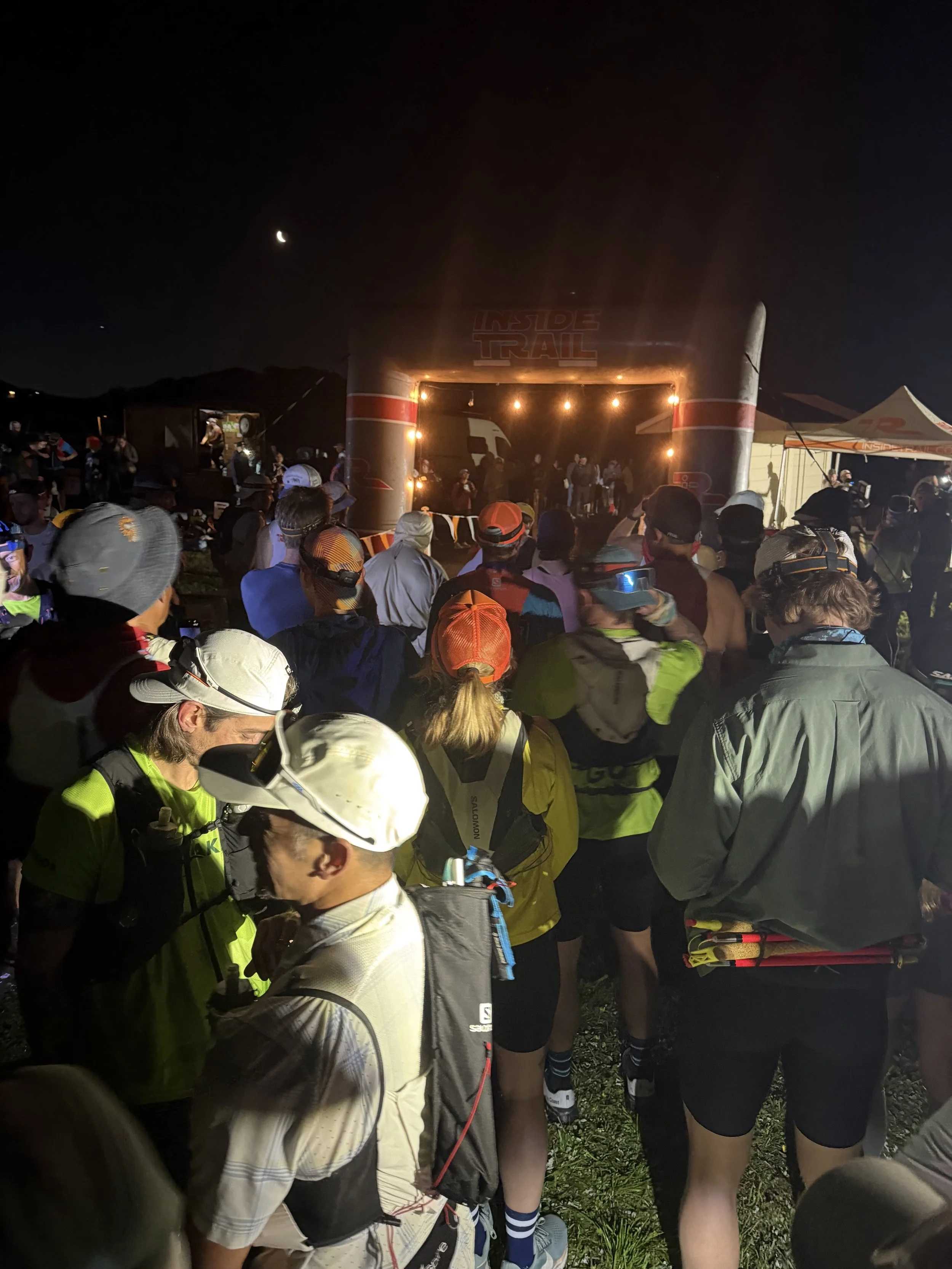
The starting line of the Marin Ultra Challenge 50-Mile Race
Let me just say, I’m no elite ultra-endurance athlete. But since I’ll be competing in my third 100-mile race in April, it was fascinating to read about how other endurance athletes tolerate extreme physical discomfort and keep moving forward under stress.
Many of the strategies described in the research align with strategies I’ve picked up on my own as a long-distance runner. Here’s an overview of a few of the research findings, along with a few ways I incorporated some of these strategies into my 50-mile race on Saturday.
Coping with Pain
The research talks about how endurance athletes often reinterpret pain as part of the challenge rather than a signal to stop.
My friends and I sometimes refer to longer races as “controlled suffering”. I don’t prepare for the possibility of pain, but rather how I will manage it when it feels unbearable.
Surprisingly, I felt pretty calm at the start line on Saturday. I tried not to think about the day ahead as a race, but as a day that I would spend outside for 10-13 hours (I finished in 12), no matter how my body was performing.
My goals at the beginning of a 50-mile race are simple: 1. Don’t go out too fast, and 2. Try to enjoy the energy of the community. We started in the dark and I tried to focus on the sea of bobbing headlamps ahead of me as we started our first big climb out of Rodeo Beach.
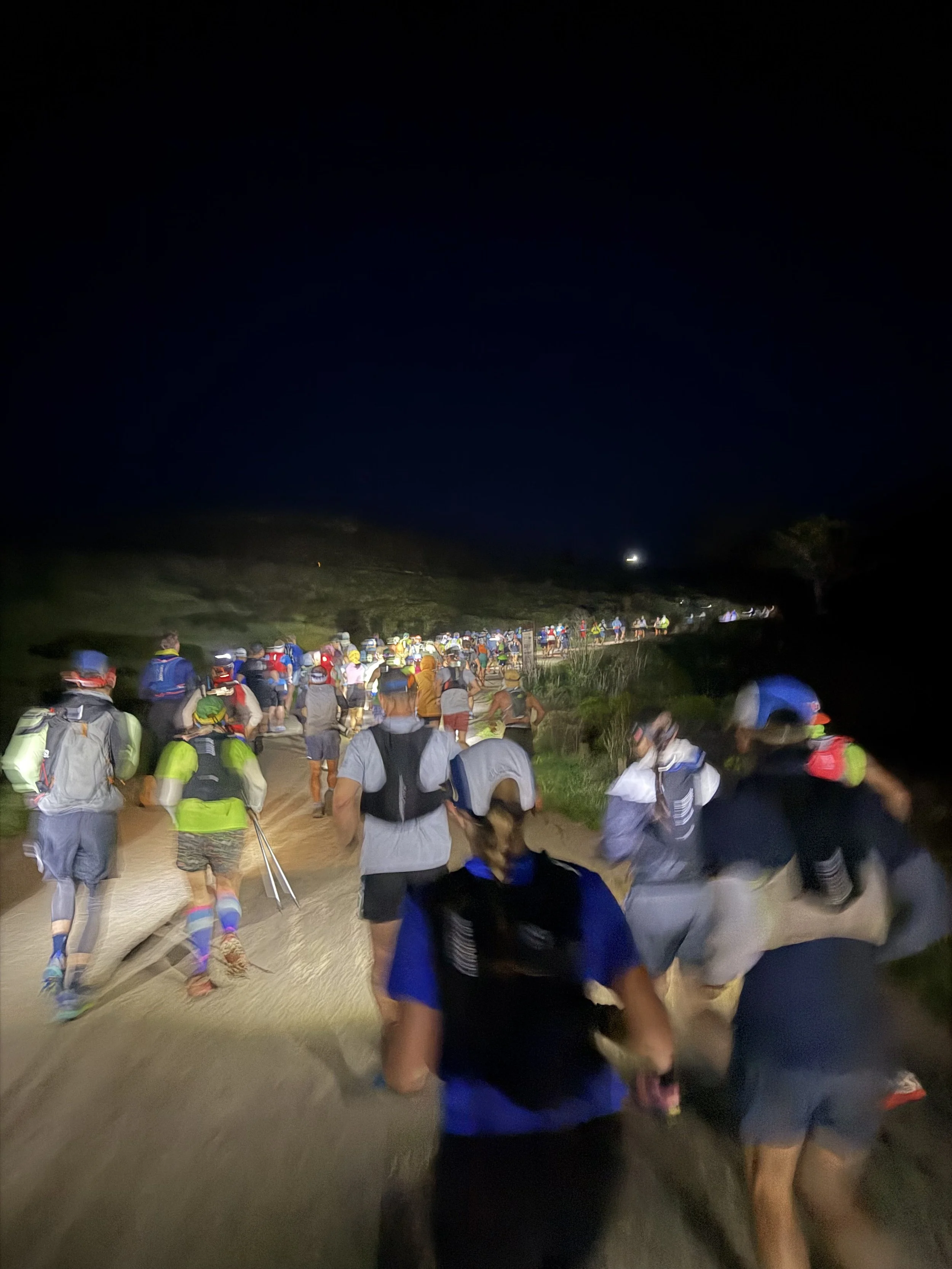
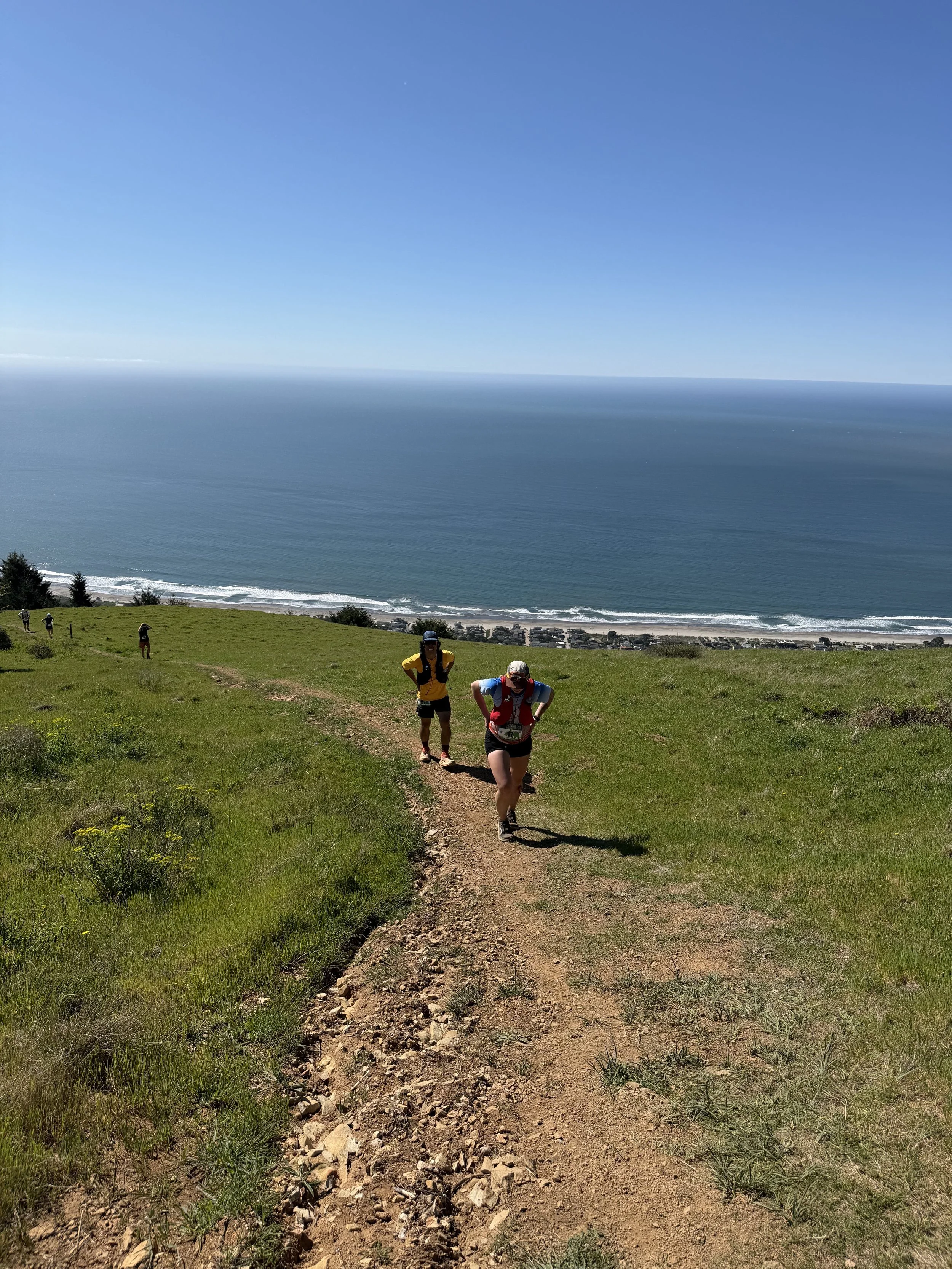
While the first few climbs were tough, they didn’t hurt much. But by mile 25, the pain was getting louder and harder to ignore. My quads were burning. The bright sun felt intense on my face and shoulders, and I could feel my heart rate increasing even as I tried to keep a steady pace. Both feet began to throb. I had a burning spot where my running vest was digging into my neck. Each time I slowed down or stopped running momentarily, it became harder to start again.
I tried to interpret the pain as an expected outcome of running a 50-mile race. I wasn’t the only one hurting, and I started chatting with some of the other runners to distract myself from the early signals of stress in my body.
Some of the best conversations with strangers happen at moments like this.
I reminded myself that it would be bizarre if I wasn’t feeling pain at a time like this. And that one day I won’t be able to run 50 miles in one day.
But today is not that day.
Staying Present
Instead of thinking about the full distance ahead in a 50- or 100-mile race, the research suggests that many runners focus on what is happening right now: their breathing, the feel of their body in motion, or the trail under their feet.
During the race on Saturday, I noticed my attention shifting throughout the day, but I always try to keep my focus on the present moment.
Occasionally my gaze would land on other runners and I’d wonder how far they traveled to get here. Two guys from Seattle continuously marveled at the mindblowing beauty of northern California. That made me smile.
I tried to stay present with how my body was feeling good in each moment, rather than notice where it hurt.
The combination of gels and liquid calories I had chosen for my fueling plan had my stomach feeling calm. It’s hard to consume hundreds of calories per hour while running. There have been days where my ability or inability to eat something steals much of my focused attention.
I felt grateful that this wasn’t the case on Saturday.
My feet weren’t always in perfect flow with the trail, but it felt so good when they were so I tried to notice that.

From time to time, a crisp breeze would hit me unexpectedly and I’d feel a surge of overpowering joy and gratitude, especially when I was running in the exposed sections of the race that were in direct sunlight.
I fell in love with each and every volunteer who filled my water bottle with ice cold water or Skratch electrolyte mix, and with the volunteer who dumped a pitcher of ice water on the back of my neck as I ran through an aid station.
These small moments might be my favorite part of long races. I don’t think there’s any other context in which I can experience such profound waves of joy, since I always have the stark contrast of suffering from just moments ago.
And then there’s the mind. Long races always involve a steady internal dialogue.
Mental Toughness
Research shows that endurance athletes rely on mental strategies like cognitive reframing, distancing strategies, and enhanced interoceptive awareness over the course of 12, 24, or 36 hours of running.
Sometimes I notice that I’m speaking my thoughts out loud.
At times it’s a monologue to try to talk myself through a difficult moment: “I’m fine, this is fine, we’re all fine”. On Saturday I found myself singing a song aloud about how much I love climbing steep hills. I won’t share the lyrics, it was pretty bad, but humor always helps.
During my first marathon, I found myself thinking “SPEEEED” each time I reached a downhill section. I’d emphasize the words in a different voice each time and I’d try to celebrate for at least a few seconds. This strategy now makes it into most of my races.
In the last 5 or 10 miles of the race, I often resort to counting. If I’m climbing a big hill, I’ll alternate 20 strides of running with 20 strides of power hiking. At that point I’m mostly just trying to drown out any negative thoughts.
The last 1-2 miles before reaching the finish line are usually pure bliss. My thoughts are more visual at that point, picturing the moment when I can stop running. I visualize the snack I’ll eat first and the sparkling water they might have waiting for us in a large bucket.
I’ve been doing endurance races for 8 years now, and I’ve gotten much better at managing my internal chatter. While I can’t say that I’m strictly a Cognitive Behavioral Therapist when working with clients, it’s undeniable that during a 50-mile race, these tools work.
If you’re going to run (mostly in isolation) for up to 36 hours, you need a few strategies.
Breaking the Distance Into Smaller Pieces
Fifty miles (or 100 miles) can feel overwhelming when I think about the distance from start to finish. I try not to even look too closely at the map, if I’m honest.
One of the most effective strategies is simply focusing on one small chunk at a time. The next landmark, the next climb, the next mile, the next snack, or the next aid station.
During my race on Saturday I found myself focusing on one hour at a time. My strength is in staying relatively consistent in my pace from start to finish, and this is the way I do it.
On Saturday, the race started at 6:30am. I tend to give myself a few goals for each hour, and the timer in my head starts back at zero after I get through the hour. There’s always a nutrition goal, like eat 250 calories or two gels, or drink a certain amount of water or electrolytes.
I usually have a distance goal for the hour. And it’s always a similar goal, no matter the day or the distance or the elevation profile. I like to keep it simple, even though I don’t always hit the goal. I also choose a number that’s easy to stack along the way, so I can do the math in my head if I want to do some quick calculations.
I try to find any reason at all to celebrate: “I’m one third of the way to the halfway point of the race!” And I never, ever allow myself to think about how many miles I have left.
These days I wear a fitness watch that tracks a lot of my data. I try not to look at any of it. I just focus on my goals for the hour. This gets more difficult as the day stretches on, but I always find it meaningful.
Why Keep Doing This?
Within the study on endurance athletes and as described by many of the athletes I’ve met over the years, the suffering of long races is described as meaningful or even transformative. Despite the discomfort, something about the challenge keeps drawing them back.
For me, running 50- and 100-mile races is a way to keep my body feeling strong. Trail running allows me to tap into so many parts of life I find meaningful, and I can experience it all in one day (or two if I’m running 100 miles).
Being out in nature.
Experiencing a sense of community.
Seeing variations of incredible trees, sunrises and sunsets, cloud formations.
Discovering what my body is capable of if I stay consistent.
Meeting interesting people with fascinating stories.
Encountering wildlife that I wouldn’t otherwise get a chance to see.
Remembering that people volunteer at aid stations for hours at a time just because…
The joy of a hot shower after a long day of racing is one of the best parts of being alive.
For many, it’s the sense of community.
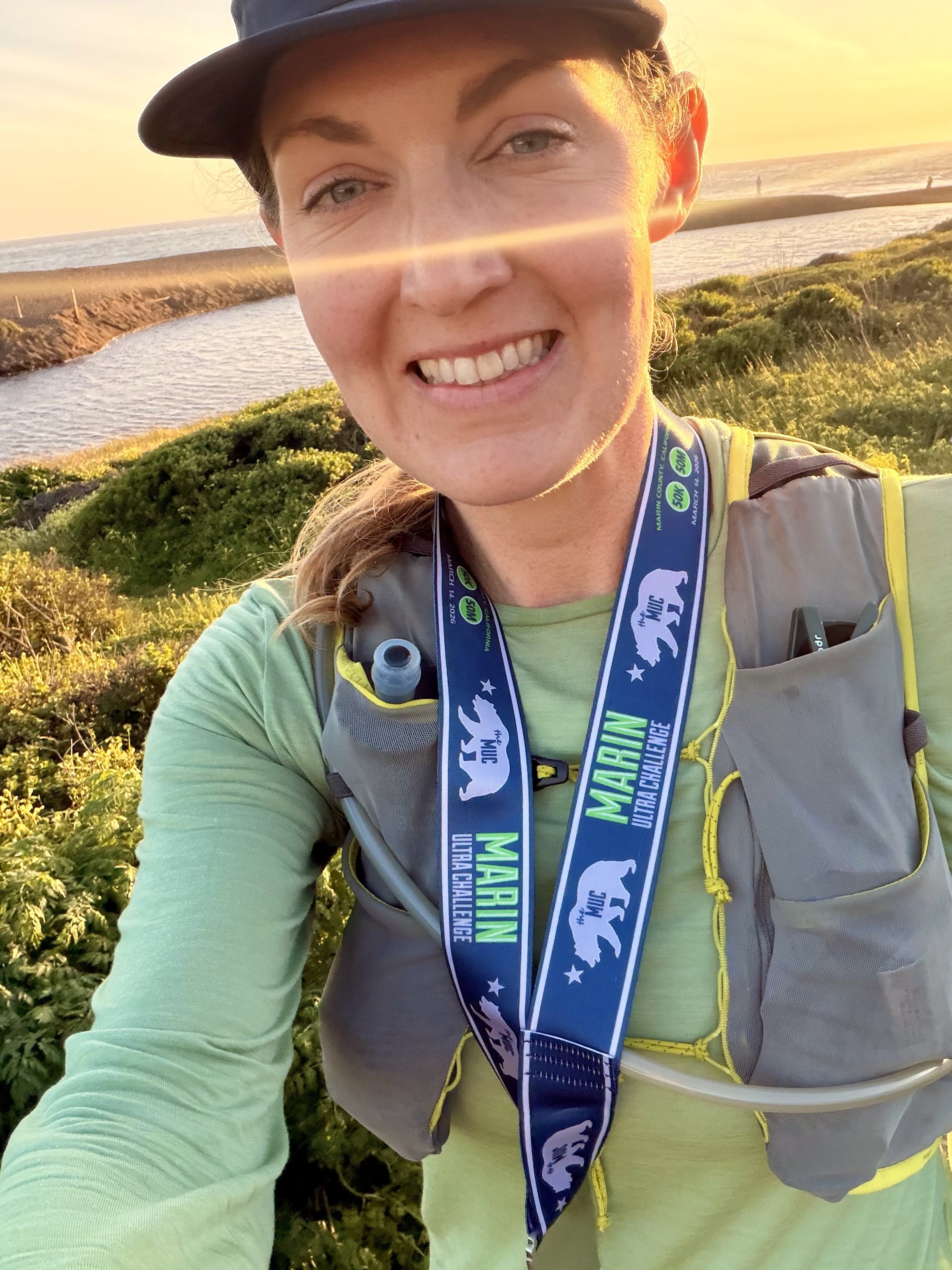
Resilience and Social Bonding
I love this community.
Somewhere during the race on Saturday I caught myself thinking about everything I’m grateful for. This is a strategy of mine, it’s not accidental.
I think about the people I love, the friendships, the mentors, my clients, those who have been kind to me. I try to picture the face of each person and make a list of all the things I appreciate most about them. I also think about the people in front of and behind me in the race. And all the pets I’ve loved over the years.
I think about the friends I’ve been training with over recent months. My running groups. The day hikers who shout out something encouraging as I pass. The volunteers. The people cheering on the sidelines.
I’m ever grateful for the community I’ve built over the past few years, and I try to contribute more than I take away from it.
Endurance and the Nervous System
One thing that stands out to me as someone who has experienced C-PTSD, is the connection between endurance running and learning to regulate my nervous system.
Long races involve moments of stress, fatigue, discomfort, pain, self-doubt, and uncertainty about the miles ahead. What allows me to continue isn’t the physical conditioning, but the ability to settle my body enough to stay engaged with the challenge rather than become engulfed and overwhelmed by it.
In many ways, this mirrors the work I do as a therapist. Approaches like EMDR help clients stay grounded in the present, even when they’ve had difficult experiences in the past.
Endurance athletes must learn to stay present with physical and emotional discomfort without shutting down, panicking, or quitting altogether. Therapy also involves building the capacity to stay present with difficult emotions while the nervous system gradually learns that it is safe to move through them.
What Trails Teach Us About Resilience
Moving through my training plan for a 100-mile race continues to remind me that endurance is built gradually.
It comes from learning how to stay present with discomfort, how to break what feels like monumental challenges into smaller ones, and how to keep moving forward even when things feel hard.
Stay tuned to see if I stay this positive after the 100-mile race.